
Most people choose a dog the same way they choose a dessert.
They see something cute, their heart melts, and they say, that one. And honestly? That’s exactly how a lot of dogs end up back in shelters.
Not because they’re bad dogs. Not because their owners are bad people.
Just because nobody stopped to ask whether that particular dog actually fit the life they were living.
So in this article, I’m going to walk you through the exact questions you should ask yourself before you bring a dog home.
By the end, you’ll know what kind of energy level, size, and temperament fits you, and I’m going to share the one factor almost everyone forgets, the one that causes more regret than anything else.
Stick around for that, because it might completely change which dog you pick.
Energy
Let’s start with the big one. Energy. And I don’t mean the dog’s energy first. I mean yours.
Be brutally honest here.
Picture a normal Tuesday. Not your ideal Tuesday, where you wake up at six and go for a run.
Your real Tuesday. How much time do you actually have?
How much do you actually move? Because dogs don’t care about your intentions.
They care about what happens every single day.
Working Breeds
Some breeds were developed to work for hours. Think Border Collies, Australian Shepherds, Belgian Malinois, Siberian Huskies.
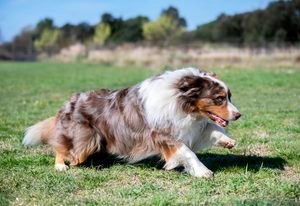
Australian Shepherd
These dogs were bred to herd, to pull, to run, to think.
If they don’t get that physical and mental outlet, they don’t just sit quietly and feel sad.
They find their own job. And their own job might be redesigning your couch cushions.
Laid Back Breeds
On the other end, you’ve got dogs that are genuinely happy with a couple of moderate walks and a lot of quality nap time.
Basset Hounds, Bulldogs, Cavalier King Charles Spaniels, and, surprisingly to a lot of people, many retired racing Greyhounds. Yes, they can sprint, but plenty of them are famously lazy at home.
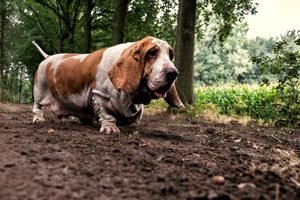
Basset Hound
So here’s your first takeaway. Match the dog’s energy to your real routine, not your fantasy routine.
If you’re active and outdoorsy, a high-energy dog can be the best adventure partner you’ll ever have.

Border Collie
If you work long hours and like quiet evenings, a lower-energy dog will thank you for it.

Cavalier King Charles Spaniel
Space and Size
Next up, space and size. And this one has a twist.
A lot of people assume small dog equals apartment dog, big dog equals house with a yard.
That’s not always true. Some small terriers are little bundles of noise and energy that can drive your neighbors up the wall.

Jack Russell Terrier
Meanwhile, some large breeds are calm, quiet, and perfectly content in a smaller space as long as they get their walks.
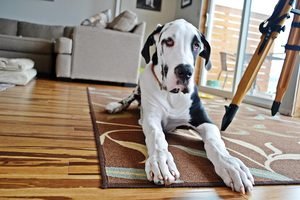
Great Dane
A yard is nice, but it’s not a substitute for exercise. Most dogs don’t exercise themselves just because there’s grass outside.
What size does matter for is practical stuff.
- Can you physically handle this dog on a leash if it pulls?
- Can you lift it into a car if it gets hurt?
- Can you afford the food, the medication doses, the bigger crate?
Bigger dogs generally mean bigger bills. And on the flip side, very small dogs can be fragile, which matters a lot if you have young kids running around.
Who’s Living in Your Household?
Which brings us to your household. Who lives with you, and who might live with you in the next ten years?
Kids, other pets, roommates, a partner who’s not totally sold on the idea.
All of that matters.
Some dogs are naturally patient and tolerant with the chaos of children (Golden Retriever). Others prefer calm adults (Chow Chow).
Some breeds have a strong prey drive, which can make life with cats or small pets a real challenge (Terriers).
That doesn’t mean every individual dog fits the stereotype, but breed tendencies are a decent starting point.
And notice I said ten years.
Because that’s the part people skip.
Depending on size and breed, many dogs live somewhere in the range of ten to fifteen years, and some small breeds live even longer. Read this to learn about Dog Years vs Human Years.
That puppy isn’t a decision for this year. It’s a decision for the next chapter of your life.
New job, new city, new baby, new relationship. Where does the dog fit?
Grooming and Maintenance
Okay, now let’s talk about grooming and maintenance, because this is where a lot of first-time owners get blindsided.
Some dogs shed. Some dogs shed like it’s their full-time career.
Huskies and German Shepherds can leave enough fur around to knit a second dog.
Then you have breeds like Poodles and Bichons with coats that don’t shed much but grow continuously, which means regular professional grooming.
That’s a recurring cost and a recurring appointment.
If anyone in your home has allergies, do your homework, and ideally spend time around the specific breed before committing.
You’ll hear the word hypoallergenic a lot, but no dog is truly allergy-free. Some people just react less to certain dogs.
X-Factor
Alright, here’s the one I promised you. The factor almost everyone forgets.
It’s not energy. It’s not size.
It’s trainability and temperament, specifically how much a dog wants to work with you versus how independent it is.
Some dogs are eager to please. Labradors, Golden Retrievers, Poodles.
They watch you, they want to know what you want, and they pick up commands quickly.
Other dogs are brilliant but independent. Many hounds, for example, were bred to follow their nose for miles without needing a human to tell them what to do.
Shiba Inus and many terriers have strong opinions of their own. That independence isn’t a flaw. It’s literally what they were bred for.
But if you’re a first-time owner expecting a dog that comes the moment you call, an independent breed can feel incredibly frustrating.
This is the mismatch that quietly breaks a lot of relationships between people and their dogs.
The owner thinks the dog is stubborn or bad.
The dog is just being exactly what it was designed to be.
So ask yourself, how much training experience do I have, and how much patience am I willing to invest?
And don’t overlook adult dogs from shelters and rescues.
Their personality is already formed, and foster families can often tell you how that dog handles kids, cats, strangers, and alone time.
You can’t get that from a ten-week-old puppy.
Get the match right, and it’s not just a pet. It’s one of the best relationships you’ll ever have.